How a reverse phone search can help you identify unknown callers
When an unknown number rings, what do you do?
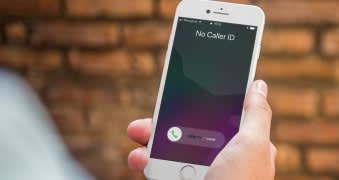
It happens to all of us. Your phone buzzes, you glance at the screen, and the number staring back at you doesn’t match anyone in your contacts. Maybe it’s a local area code you don’t recognize, or a toll-free number from a state you’ve never visited. Before you answer, a moment of hesitation sets in. Is this a friend with a new cell phone, a telemarketer, or something worse?
Most people react in one of two ways. They let it go to voicemail and hope the caller leaves a name. Or they pick up, listen for a few seconds, and hang up if it sounds like a recorded pitch. Neither approach really solves the problem. You still don’t know who called, and if it was a phone scam, you may have already tipped off the scammer that your number is active. That’s where a reverse phone search becomes a practical, low-effort tool to get answers fast.
What reverse phone search actually does
A reverse phone search takes a phone number and tries to return the name, location, and sometimes additional details about the person or business behind it. Unlike a regular telephone directory that lists numbers by name, this process works backward. You start with the digits and work toward the identity. It sounds straightforward, and in many cases it is, but the quality of results depends heavily on the type of number and the data sources available.
For landline numbers, the process taps into public records, phone company listings, and CNAM databases. CNAM is the system that delivers the name you sometimes see on caller ID. It was designed for billing purposes, not accuracy, so the name attached to a landline can be outdated or generic. Still, it gives you a starting point. For cell phone and VoIP numbers, the picture gets trickier. Mobile numbers are not published in traditional directories the way landlines used to be. That means a reverse lookup service has to pull from other sources like social media profiles, public records, and user-contributed data.
Services like WhitePages, Spokeo, and Truecaller each handle this differently. WhitePages leans on public records and user submissions. Spokeo aggregates social media search results and data broker information. Truecaller relies heavily on its user community to identify incoming calls. None of them are perfect, and each has blind spots. A reverse lookup might return a name that matches the number, or it might show a previous owner. That’s why it helps to understand what you’re looking at before you act on it.

When a reverse phone search saves you time
I remember a situation a few years ago when a relative kept getting calls from a number with an unfamiliar area code. The caller never left a voicemail, just rang and hung up. Over a week, it happened six times. She started worrying it was a debt collector or someone with bad intentions. I ran the number through a reverse phone search and found it belonged to a local pharmacy that had recently changed its automated appointment reminder system. The pharmacy’s main line was different from the outbound reminder number. A simple lookup turned weeks of worry into a five-second explanation.
That’s the kind of use case where a reverse phone search shines. It cuts through the unknown. Whether it’s a missed call from a doctor’s office, a wrong number that keeps dialing back, or a friend who changed their cell phone and didn’t tell you, a quick lookup can confirm the caller without a conversation. It also helps with telemarketers. If a number keeps calling and you suspect it’s a robocall, running a reverse lookup can sometimes reveal the company behind it. That information makes it easier to file a complaint with the FCC or block the number with more confidence.
The limits you need to know
Reverse phone search is not magic. It has real limitations, and understanding them keeps you from expecting too much. The biggest one is coverage. Many cell phone numbers simply do not appear in any public database. If the owner has never listed their number anywhere, never used it to register for a service, and never connected it to a social media account, there may be no record to find. Some services will then show you names of people who used to own that number or people who live at the same address. That can be misleading.
Another limitation is timeliness. Public records and CNAM entries update slowly. A number that belonged to a legitimate business two years ago may now belong to a spam operation. A reverse lookup that returns a clean name might give you false confidence. That’s why it’s smart to cross-reference results with a scam detector or check recent user comments on services like Truecaller. If other people have flagged the number as a phone scam or a robocall, you’ll see it in the community notes.
Privacy is also worth considering. When you run a reverse phone search, you are querying databases that may log your activity. Some services are upfront about this; others are not. If you are searching for a number because you suspect a scam, the last thing you want is to hand your own information to a data broker. Stick with services that have clear privacy policies and do not resell your search history.
How to get the most out of a reverse lookup
If you decide to try a reverse phone search, a few practical steps will improve your chances of getting useful results. First, make sure you have the full ten-digit number including the area code. Without the area code, the search is guessing. Second, try more than one service. A number that shows nothing on WhitePages might have a profile on Spokeo or a user report on Truecaller. Each platform pulls from different data sets, and combining them gives you a fuller picture.
Third, look at the date of the information. If a listing shows a name and address but the data is from 2016, treat it with caution. People move, numbers get reassigned, and scammers spoof old numbers. Fourth, use the search as a starting point, not a verdict. If the result matches what you expect, great. If it shows something odd, dig deeper. A social media search for the name and area code combination can sometimes confirm or refute what the reverse lookup returned.
Finally, remember that a reverse phone search works best for numbers that have been used in public contexts. If you are dealing with a VoIP number that was created yesterday and used only for spam calls, it may have no digital footprint at all. In those cases, no lookup tool will help. Your best move is to block the number and report it.
Scams, robocalls, and the role of reverse search
Phone scams have become more sophisticated. Caller ID spoofing makes a scam call look like it comes from a local number, sometimes even your own area code and the first few digits of your own number. That trick is designed to make you pick up. A reverse phone search can sometimes reveal the true carrier or the region where the number was originally assigned, but spoofed numbers often point back to a real person who has no connection to the scam. That means the lookup might show a name that looks legitimate, even though the call is fraudulent.
That’s why the FCC requires carriers to implement STIR/SHAKEN, a set of protocols that help verify caller ID. It is not a silver bullet, but it reduces spoofing. In the meantime, a reverse lookup combined with a healthy dose of skepticism is your best defense. If a number claims to be your bank, hang up and call your bank directly using the number on the back of your card. Do not trust what the incoming caller ID says.
Robocalls are a different beast. Many of them originate from auto-dialers that cycle through numbers quickly. A reverse phone search on a robocall number often returns nothing or shows a generic label like “Wireless Caller.” That’s because the number is either temporary or spoofed. Some services maintain lists of known robocall numbers, and checking those can save you time. But for the most part, robocalls are a nuisance that reverse lookup can only partially address.
Practical alternatives when search fails
When a reverse phone search comes up empty, do not assume the number is safe. It may simply be new or unlisted. Try a few different approaches. Search the number on a search engine along with the word “scam” or “report.” Sometimes other people have posted about it on forums or complaint boards. You can also try searching the number on social media platforms. Many people link their cell phone to their accounts, and a social media search can surface a profile even when traditional directories have no record.

If you are dealing with a persistent telemarketer, consider adding your number to the National Do Not Call Registry. It will not stop scammers, but it gives you legal footing if a legitimate company keeps calling. For robocalls, your carrier may offer a call-blocking service. Some of these services use community reports and reverse lookup data to flag suspicious numbers before they reach you.
Wrapping it up
A reverse phone search is not a cure-all, but it is one of the most useful tools for identifying unknown callers. It works well for landlines, reasonably well for VoIP numbers with a history, and sometimes not at all for brand new cell phones or spoofed numbers. The key is knowing what it can and cannot do. Use it as a first step, not the final word. Combine it with common sense, a quick social media search, and an awareness of phone scam tactics. That combination will keep you informed and reduce the anxiety that comes from an unknown number lighting up your screen.
When you get a call from an unfamiliar area code, take a moment before you answer. Run a reverse phone search. Check the results against what you know. If the information lines up, great. If it does not, trust your instinct and let it go to voicemail. A few seconds of searching can save you from a long conversation with a telemarketer or worse.